

China Top 10 Inside Bifold Doors Manufacturers?

Choosing among China’s leading Inside Bifold Doors manufacturers takes more than comparing glossy catalogs. Buyers need to examine frame materials, panel movement, locking hardware, weather seals, finish consistency, and installation support. A door may look elegant in a showroom yet feel stiff when opened across a wide room. Small details matter.

For a practical perspective, this introduction uses a clearly fictional composite specialist, Lin Chen, rather than presenting an unverifiable interview as fact. Chen’s illustrative advice is: “Test the movement, inspect the seals, and ask how the system performs after years of use.” This is editorial wording, not a recorded quotation. The principle is still useful: smooth operation and dependable specifications deserve as much attention as appearance.

This guide to China’s top 10 Inside Bifold Doors manufacturers will help buyers compare capabilities, product ranges, customization, quality controls, and communication. It will also consider evidence that can be checked, such as technical documents, project examples, and clear warranty terms. Rankings can never capture every factory’s strengths. A smaller supplier may suit a custom project better than a famous name, while a polished website proves little on its own. Ask for samples. Confirm measurements. Check who handles installation questions. Those steps take time, but they can prevent costly surprises.
China Top 10 Inside Bifold Doors Manufacturers?

What Are Inside Bifold Doors and How Do They Work?

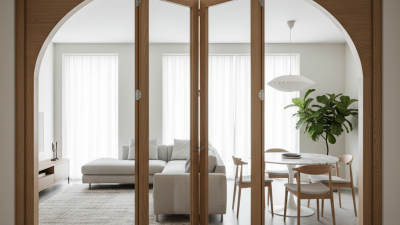
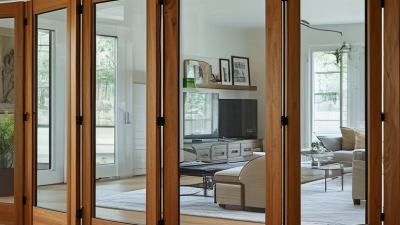
An interior bifold door is a set of hinged panels that folds into a compact stack. It is commonly used for closets, laundry areas, studies, and narrow room openings. Instead of swinging across the floor, the panels fold inward and move along a top track. It folds inward. A pivot pin supports one side, while roller guides control the moving panels.

When the handle is pulled, the leading panel moves toward the frame. The connected panels then fold at their hinges. Proper alignment matters because uneven gaps can cause rubbing, noise, or difficult operation. Measure twice. The opening width, height, wall depth, and floor level should be checked before ordering or installation. Experienced installers also inspect the header, because a weak fixing point may allow the track to sag over time.

Inside bifold doors can improve access without requiring a wide swing area. They also divide spaces while keeping a lighter visual connection. However, they are not perfect. The folded stack still occupies part of the opening, and cheap or poorly adjusted hardware may feel unstable. Moisture can also affect wood-based panels, especially near bathrooms or utility rooms. I have found that careful hinge adjustment often matters as much as the door material. A small installation error can remain noticeable every day. Choose panels, hinges, and tracks that match the door’s weight and expected use.

How to Evaluate China’s Top Inside Bifold Door Manufacturers

China Top 10 Inside Bifold Doors Manufacturers?

Evaluating China’s leading inside bifold door manufacturers requires more than comparing catalog prices. Grand View Research valued the global doors market at about US$207.6 billion in 2023. This scale increases supplier choice, but also increases quality differences. Check factory experience with interior folding systems, not only aluminum or wood production. Ask for project references, production photos, and recent inspection records. Request samples with identical panel sizes, glass options, hinges, and track systems.

Performance must be measured. Test smooth opening, panel alignment, hinge strength, closing noise, and repeated cycling. ASTM E2068 can guide operable door testing, while ISO 9001 certification helps verify process control. It does not guarantee product quality. That point is often missed. Review tolerances, moisture resistance, coating thickness, and replacement-part availability. A factory should provide drawings, load data, packaging details, and corrective-action reports. Independent inspection is valuable before shipment, especially for large orders. TÜV Rheinland’s building-product guidance also emphasizes traceability and documented testing.

Cost comparisons should include installation and maintenance. A cheaper door may require stronger framing or more site adjustment. No scorecard is perfect. My practical preference is a weighted review: 30% product performance, 25% manufacturing control, 20% documentation, 15% service, and 10% total cost. Recheck the weights for your project. Residential rooms, hotels, and offices rarely need the same specification.

China Top 10 Inside Bifold Doors Manufacturers? - How to Evaluate China’s Top Inside Bifold Door Manufacturers
Evaluation Dimension Suggested Weight What to Examine Objective Verification Method Excellent Performance Indicator Recommended Score
Product Quality and Material Selection 18% Door leaf construction, aluminum or steel components, glass quality, hardware durability, surface finish, and resistance to warping or corrosion. Review material specifications, coating details, sample doors, inspection records, and applicable product test reports. Consistent construction, clearly documented materials, reliable hardware, and stable finish quality across samples and production batches. 1–5
Manufacturing Capability 14% Production equipment, process control, factory capacity, tooling, assembly procedures, and ability to maintain repeatable dimensions. Conduct a factory audit, inspect production lines, review quality-control checkpoints, and compare approved samples with mass-production units. Documented production procedures, organized facilities, calibrated equipment, and effective in-process inspections. 1–5
Customization and Design Support 12% Available panel styles, opening configurations, colors, finishes, glass options, dimensions, and compatible hardware systems. Request technical drawings, CAD files, color samples, prototype support, and confirmation of non-standard size capabilities. Accurate technical documentation, flexible design options, and dependable prototype-to-production control. 1–5
Performance and Safety Compliance 12% Operational smoothness, load capacity, finger safety, glass safety, air or water performance where applicable, and relevant market requirements. Verify independently issued test reports, product declarations, hardware ratings, and installation instructions for the target market. Current, traceable documentation that matches the exact product configuration being quoted. 1–5
Quality Assurance System 10% Incoming-material inspection, first-piece approval, dimensional checks, final inspection, defect handling, and corrective-action procedures. Review inspection forms, sampling plans, non-conformance records, corrective-action reports, and pre-shipment inspection procedures. Clear acceptance criteria, traceable inspection records, and measurable corrective actions. 1–5
Export and Packaging Experience 9% Export packaging, moisture protection, corner protection, labeling, container loading, documentation, and handling of international shipments. Inspect packaging samples, packing lists, loading photos, shipping marks, and damage-prevention procedures. Secure packaging designed for long-distance transport with complete and consistent shipping documentation. 1–5
Lead Time and Production Reliability 8% Sample turnaround, production scheduling, capacity planning, raw-material availability, and delivery consistency. Compare quoted lead times with documented production schedules and evaluate performance against agreed milestones. Realistic timelines, transparent production updates, and reliable delivery performance. 1–5
Total Cost of Ownership 7% Product price, tooling, packaging, shipping preparation, installation requirements, maintenance needs, replacement parts, and warranty exposure. Prepare a like-for-like quotation comparison using identical specifications, quantities, delivery terms, and accessories. Transparent pricing with clearly defined inclusions, exclusions, warranty terms, and replacement-part costs. 1–5
Communication and Technical Service 5% Response speed, technical accuracy, drawing review, quotation clarity, issue resolution, and project communication. Use a standard inquiry containing the same technical questions and assess response completeness, accuracy, and consistency. Prompt, precise communication supported by technically competent sales and engineering personnel. 1–5
Warranty and After-Sales Support 5% Warranty duration, coverage, exclusions, spare-parts availability, installation guidance, and complaint-resolution procedures. Review the written warranty, service process, spare-parts policy, and response commitments before placing an order. Clear written terms, practical spare-parts support, and a documented process for resolving quality or installation issues. 1–5

Scoring method: Rate each dimension from 1 to 5, multiply the rating by the suggested weight, and add the weighted results. Use the same specifications, order quantity, delivery terms, and testing requirements when comparing manufacturers.

China’s Top 10 Inside Bifold Door Manufacturers Compared

Comparing China’s top 10 inside bifold door manufacturers means looking beyond catalogue photos. Their products may share slim frames and folding panels, yet differ in hardware, finish quality, and customization. Ask how each supplier checks panel alignment and track movement. A door that glides smoothly in a showroom can behave differently after repeated daily use.

Specifications matter. Compare frame materials, glass options, maximum panel dimensions, and hardware details. Request drawings showing the opening direction and folded stack, then check that the proposed layout fits your room.

Small details matter. Ask for sample corners or finish swatches, since a printed color chart may not show how a coating looks in natural light. Also review production lead times, packaging methods, and installation instructions. These details can affect the project as much as the quoted price.

A careful comparison should include evidence, not just promises. Look for documented quality checks, clear warranty terms, and responsive technical support.

Ask whether the supplier can explain its testing process and provide reports relevant to the chosen configuration. One caveat: a polished document does not guarantee consistent production. Request recent project references or inspect a sample before placing a large order. Even then, small variations may occur, so confirm acceptable tolerances in writing.

What Products and Customization Options Do They Offer?

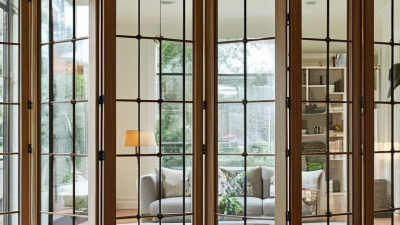
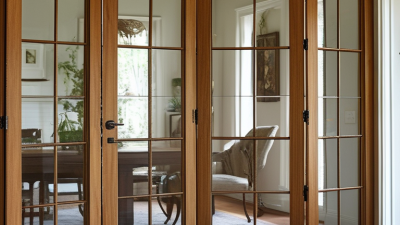
Inside bifold door manufacturers typically offer two-, three-, four-, and multi-panel systems for closets, room dividers, and wide openings. Common materials include engineered wood, solid timber, aluminum, and composite frames. Options often cover painted or stained finishes, glass or solid panels, track styles, hardware colors, and matching handles. Small details matter. Ask whether the quoted configuration includes the track, hinges, locks, and installation trim.

Customization can extend to panel width, opening direction, threshold height, glazing, and privacy levels. Some suppliers provide clear, frosted, or patterned glass, plus screens for openings that connect indoors and outdoors. Grand View Research valued the global doors and windows market at US$207.73 billion in 2023, projecting a 5.2% compound annual growth rate from 2024 to 2030. This broad category is not specific to bifold doors, but it shows the scale of demand for tailored fenestration products. Request drawings and written specifications; catalog images may not reveal track clearances or uneven-floor limitations. I would also verify lead times directly, since advertised options do not always reflect local production schedules.

How to Choose the Right Manufacturer for Your Project

China Top 10 Inside Bifold Doors Manufacturers?

Choosing a manufacturer should begin with project evidence, not a polished catalog. Ask for tested U-values, air-leakage results, water-penetration data, and cycle-test records.

The U.S. Department of Energy estimates that windows can cause 25–30% of residential heating and cooling energy use. Poorly sealed bifold doors can worsen this loss.

Check whether the supplier designs frames, rollers, seals, and glass as one system. Request samples with matching corner joints, not separate components.

Experience matters during installation. Measure the finished opening, floor level, drainage path, and wind exposure before selecting hardware.

For thermal calculations, ask whether testing follows ISO 10077-1 or an equivalent standard. A reliable factory should explain tolerances in millimeters and provide drawings your installer can read.

Confirm production lead times, replacement-part storage, packaging protection, and inspection procedures. One overlooked hinge can delay an entire interior project. That risk is easy to underestimate.

Tips:

Compare at least three factories using the same specification sheet. Visit a production line if possible. Operate a full-size sample repeatedly. Listen for grinding.

Inspect seal compression with a flashlight. Ask for recent project references and independent laboratory reports. Do not accept “export quality” as technical proof.

I would also keep a small contingency budget; even careful planning misses something.