How to Choose the Best Inside Bifold Doors for Your Home?
When choosing the best Inside Bifold Doors for your home, expert John Smith emphasizes, “The right doors can transform your space.” Inside Bifold Doors are not just functional; they play a significant role in aesthetics and space efficiency. Their ability to fold open creates flexibility and makes the best use of limited areas.
Considering the variety available, you may feel overwhelmed. Different materials, styles, and configurations can lead to confusion. You need to think about your home's existing décor and functionality. The doors should complement your space while serving practical purposes.
It's essential to reflect on your unique needs. Not all inside bifold doors suit every environment. Potential issues may arise if compatibility with your home style is overlooked. Investing time in research can result in a choice that enhances your living space for years.
Understanding the Basics of Inside Bifold Doors
Understanding the basics of inside bifold doors is crucial for making an informed choice for your home. Bifold doors are versatile, allowing for flexible space management. They fold against one another, maximizing space efficiency. According to a 2022 industry report, bifold doors can increase natural light by up to 50%. This benefit enhances ambiance and creates a more inviting environment.
When choosing bifold doors, consider materials like wood, vinyl, or aluminum. Each material has unique qualities that affect durability and aesthetics. A study from the National Association of Home Builders (NAHB) indicated that 65% of homeowners preferred wood finishes for their warmth and beauty. However, wooden doors require regular maintenance to prevent warping and damage.
Tips: First, evaluate the space where you plan to install the doors. Ensure it can accommodate the folding action without obstruction. Also, think about the style that complements your home’s architecture. Personal tastes play a vital role in achieving desired aesthetics. Don’t overlook how color and finish will affect overall design. Contemplate the balance between functionality and aesthetics to ensure lasting satisfaction.
Types of Materials Used for Inside Bifold Doors
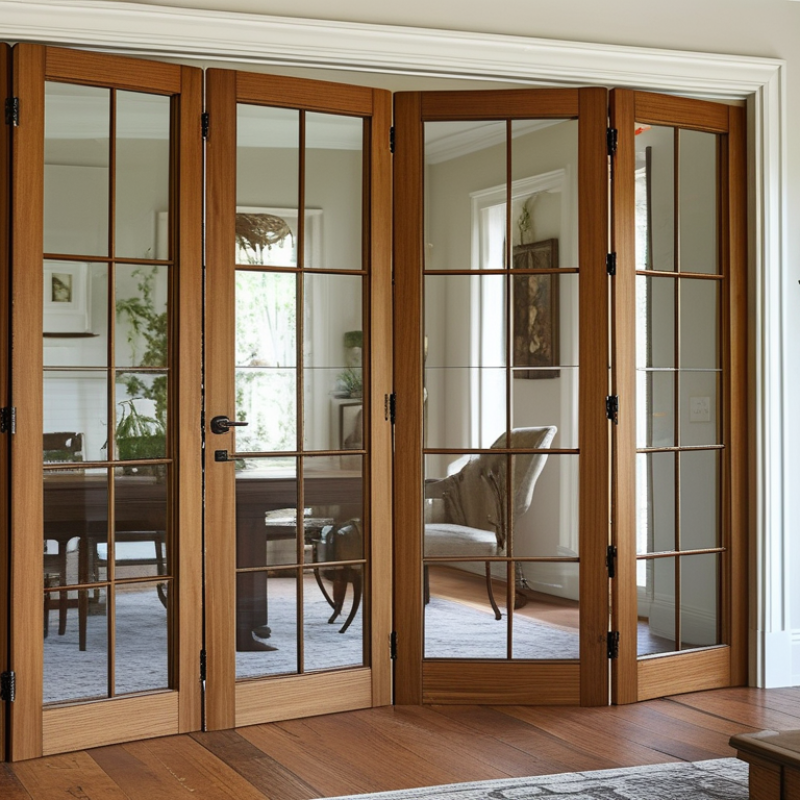
When choosing inside bifold doors, the material is crucial. Different materials offer various benefits. Wood, for example, is a classic choice. It provides warmth and can be customized easily. However, wood requires regular maintenance and is susceptible to warping in humid conditions.
Composite materials have gained popularity in recent years. They combine the beauty of wood with enhanced durability. Reports show that composite doors can last up to 50% longer than traditional wood doors. On the downside, they may lack the authentic feel of solid wood.
Aluminum bifold doors are another option. They are lightweight and resistant to corrosion, making them ideal for areas with high moisture. Many homeowners appreciate the sleek look of aluminum. However, they can be prone to condensation. Each material has strengths and weaknesses, so it’s essential to evaluate your specific needs and environment.
How to Choose the Best Inside Bifold Doors for Your Home? - Types of Materials Used for Inside Bifold Doors
| Material Type |
Advantages |
Disadvantages |
Best Use |
| Wood |
Aesthetic appeal, durability, natural insulation |
Can warp with moisture, requires maintenance |
Traditional and rustic interiors |
| Steel |
Strong, secure, low maintenance |
Can be less visually appealing, can rust |
Modern and industrial spaces |
| Aluminum |
Lightweight, resistant to corrosion, minimal maintenance |
Less thermal insulation than wood |
Contemporary designs |
| Glass |
Brightens spaces, modern look, allows visibility |
Less privacy, can require cleaning |
Dividers in open spaces or modern settings |
| Composite |
Combines benefits of different materials, often eco-friendly |
Cost can be higher, variable quality |
Versatile, suitable for many home styles |
Factors to Consider When Choosing Bifold Doors for Your Space
When choosing bifold doors, consider the space they will occupy. Measure the area accurately. Ensure that the doors will open smoothly without obstruction. This detail is crucial for functionality.
Also, think about your aesthetic preferences. Bifold doors come in various styles and materials. Would you prefer wood for a classic look or glass for a modern feel? Each material has distinct benefits. Wood offers warmth, while glass enhances natural light.
Consider your budget too. Bifold doors can vary widely in price. Cheap options might compromise on quality. Investing in sturdy, well-made doors often pays off in the long run. However, you may need to reflect on what features are essential versus optional. Keep in mind, the right bifold doors should enhance both beauty and function in your home.
Evaluating Style and Design Options for Bifold Doors
Choosing bifold doors for your home can be a rewarding but complex decision. Evaluating style and design options is crucial. Various materials and finishes are available, including wood, aluminum, and composite. Each material has distinct characteristics that influence aesthetics and durability. Wooden doors provide a classic look but may require regular maintenance. Metal options offer a modern touch and superior longevity with minimal upkeep.
Design patterns also play a significant role. Decide between solid panels and glass inserts based on your space's needs. Glass panels can enhance natural light and create a sense of openness. However, they may compromise privacy. Think about your home's overall style. A seamless blend with existing decor can be challenging but essential for cohesion.
Consider functionality alongside aesthetics. Measure your space carefully. Bifold doors need adequate room to operate smoothly. Sometimes, adjusting the layout of your room can enhance the door's functionality. Reflect on your lifestyle. High-traffic areas may benefit from durable, easy-to-clean materials. Ultimately, investing time in the decision-making process will ensure satisfaction for years to come.
Measuring Your Space for Perfect Bifold Door Installation
Measuring your space accurately is crucial for a successful bifold door installation. A common mistake is underestimating the required clearance. Industry reports suggest that at least 3 inches of space above the door frame is ideal. This ensures smooth operation and prevents potential obstruction from the ceiling or adjacent walls.
To achieve the perfect fit, take precise measurements of your door frame. Use a tape measure to record the width and height. The standard width ranges from 48 to 96 inches. However, consider your specific needs. Sometimes, a custom size might be necessary to match unique architectural features.
**Tip:** Always measure twice to avoid costly mistakes. This step can save time and ensure that the door operates effectively.
Another factor is the thickness of the walls. Many homes have non-standard dimensions. If your wall is too thin, the door may not align properly, leading to sagging. Additionally, check for any obstructions in the area, such as light switches or baseboards, which could complicate installation.
**Tip:** Factor in the type of trim you'll use. It can change the overall look and may affect your spacing considerations.
Incorporating these elements while measuring will enhance your installation and overall aesthetic. Remember, careful planning pays off in the long run.
Best Inside Bifold Doors Size Comparison
This chart displays the number of available bifold door models based on dimensions. As you can see, the most common options are the widths of 30" and 36", while the height options of 72" and 80" also offer a good variety of models. This information can help you choose the best bifold door for your home, ensuring a perfect fit.