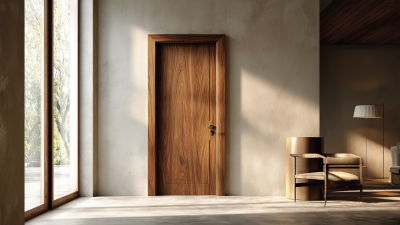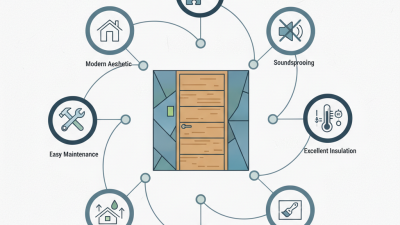





China Top 10 Flush Door Manufacturers for Global Buyers

China’s flush door industry has become an important sourcing base for global construction, renovation, and hospitality projects. Buyers now expect more than attractive surfaces. They need stable core materials, accurate dimensions, reliable fire performance, and consistent delivery. A Door Flush Door may look simple, yet its internal structure affects sound control, moisture resistance, weight, and long-term service life.

Industry reports support this growing demand. Grand View Research has identified construction and renovation activity as major drivers of the global doors market. Fortune Business Insights also highlights rising urban development, commercial construction, and replacement demand across Asia-Pacific. China’s National Bureau of Statistics continues to report substantial activity in manufacturing, construction, and real-estate-related supply chains. These trends help explain why Chinese manufacturers remain visible in international procurement programs.

This guide presents China’s top 10 flush door manufacturers for global buyers. The selection considers manufacturing experience, export capability, product customization, quality systems, material transparency, and after-sales support. Relevant standards may include ISO 9001, ISO 14001, EN 14351-1, and applicable ASTM requirements, depending on the project and destination market. Factory audits still matter. Product pages are not enough.

Expect differences in price, lead time, testing, and communication. Some public data is incomplete, and rankings cannot capture every factory’s current performance. That limitation deserves attention. Buyers should verify test reports, sample construction, packaging details, and production capacity before signing contracts. A well-finished door is useful. A documented supply chain is safer.
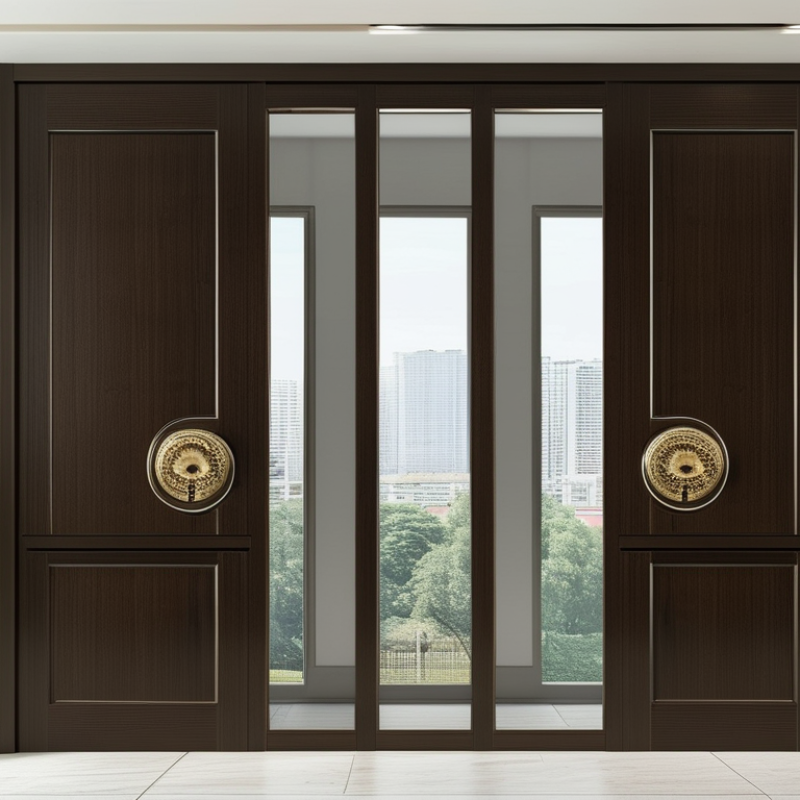
China Top 10 Flush Door Manufacturers for Global Buyers

Flush Doors Explained: 35–45 mm Leaves, Rw 30–45 dB, and Core Types

Flush doors are built with smooth faces and a concealed internal structure. For global buyers, leaf thickness usually ranges from 35 to 45 mm. A 40 mm leaf often balances weight, stiffness, and hardware compatibility. Thicker leaves may improve impact resistance, but they also increase shipping weight. That matters during installation.

Core selection changes the door’s behavior. Hollow-core construction suits light interior use and lower budgets. Honeycomb cores reduce weight but offer limited sound control. Solid timber or particleboard cores feel stronger and resist everyday knocks. Mineral or mineral-wool cores can improve fire performance and acoustic stability, subject to certified testing. Moisture-resistant cores are safer for humid corridors, though edge sealing remains essential.

Sound ratings need careful reading. An Rw value of 30 to 45 dB describes laboratory sound reduction, not guaranteed room silence. A door rated Rw 35 dB may perform poorly if the frame has gaps. Compression seals, threshold details, and correct installation are equally important. I have seen attractive doors fail because installers ignored the perimeter seal. That is a practical warning. Buyers should request test reports, core specifications, leaf tolerances, and hardware schedules before ordering. Test standards can differ between countries, so comparisons are not always direct. A higher number is not automatically better for every project.

China’s Top 10 Flush Door Manufacturers: Products, Capacity, and Export Reach

China Top 10 Flush Door Manufacturers for Global Buyers

China’s top ten flush door manufacturers serve residential, hotel, office, and institutional projects. Their products commonly include molded, plywood-faced, laminate, and fire-rated interior doors. Selection should consider core materials, surface durability, moisture resistance, and hardware compatibility. A good factory can provide samples, drawings, test reports, and stable quality records.

Production capacity differs widely across this group. Some operate automated pressing and cutting lines, while others rely on skilled manual finishing. Monthly output may range from several thousand doors to more than 100,000 units. Capacity alone proves little. Buyers should inspect panel flatness, edge sealing, veneer matching, and packaging strength. Small defects often appear after shipment, not during factory visits. That weakness deserves attention.

Their export reach covers North America, Europe, the Middle East, Southeast Asia, Africa, and Oceania. Experienced suppliers understand container loading, moisture protection, labeling, and destination requirements. They may also support custom sizes, acoustic cores, concealed hinges, and low-emission materials. However, export experience can vary by market. A supplier successful in one region may lack knowledge of another region’s fire or building standards. Buyers should request recent project references and verify documents independently. Clear communication matters. It prevents expensive revisions.

How the Top 10 Are Ranked: ISO 9001, EN 1634-1, ASTM E90, and Lead Time

For global buyers, ranking flush door manufacturers requires more than catalog photos or polished factory videos. ISO 9001 shows whether quality processes are documented, monitored, and corrected. Buyers should check the certificate scope, audit date, and production site. A valid certificate does not guarantee perfect doors.

EN 1634-1 matters when fire-rated doors are specified. It evaluates fire resistance through controlled tests on complete doorsets, including frames, hardware, and glazing. Request the test report, approved configuration, and performance period. Small changes can matter. A different lock or frame may invalidate the original result. ASTM E90 measures airborne sound transmission in a laboratory setting. Higher acoustic performance requires verified test data, not a thicker-looking panel.

Lead time reveals operational discipline. Ask for current capacity, material availability, sampling time, and loading schedules. A supplier promising delivery in ten days may be quoting unfinished production, not inspected goods. Track the timeline from approved drawings to packing. Include buffer days for hardware shortages and export inspections. This is where rankings become less comfortable. Some manufacturers hold strong certificates but communicate poorly. Others deliver quickly but provide weak technical evidence. A practical score should weigh certification credibility, test transparency, response accuracy, and repeatable lead times. Buyers should inspect recent records, not rely only on impressive claims.

Factory-to-Project Comparison: MOQ, Fire Ratings, FSC, Warranty, and Incoterms

Global buyers comparing China’s top ten flush-door manufacturers should score factories against the project, not catalog photos. MOQ changes the project math. Ask whether it applies per size, veneer, color, or complete order. For example, an 800-door hotel package may need a lower unit MOQ than a 30-door villa. Require production samples, moisture readings, edge-banding records, and a signed tolerance sheet. These details expose factory control better than polished showroom images.

Fire performance needs documents, not promises. NFPA 80 requires listed and labeled door assemblies, including compatible frames, hardware, and glazing. A 60-minute leaf alone may fail inspection. Request the test standard, scope, core construction, intumescent details, and certificate holder. FSC sourcing also deserves checking. The FSC Facts & Figures 2023 report recorded about 236 million hectares of certified forest worldwide. Ask for a valid chain-of-custody certificate and invoice claim. “FSC wood” without traceable paperwork is weak evidence.

Warranty language should name delamination, warping, finish failure, and replacement timing. It should also state exclusions for humidity, installation, and site storage. Five years sounds strong. Sometimes it is vague. Compare remedies, not just duration. Under ICC Incoterms 2020, FOB transfers risk after onboard loading, while DDP places broader delivery duties on the seller. Confirm export packing, destination charges, customs responsibility, and insurance separately. I would also price one shipment under two terms; the cheaper quote can hide local fees.

Global Buyer Due Diligence: Tolerances, Test Reports, and Compliance Data

China’s top 10 flush door manufacturers should face the same technical checks from every global buyer. Supplier reputation is only a starting point. Ask for approved drawings showing leaf thickness, frame dimensions, squareness, and permitted gaps. Confirm tolerances in writing, not through informal messages. A 1 mm variation may be acceptable for one project, but costly for another. I have seen doors pass visual inspection yet fail during installation.

Request recent test reports for fire resistance, moisture performance, sound reduction, and hardware durability, when relevant to your specification. Each report should identify the tested model, construction, sample size, laboratory, standard edition, and test date. Verify that the report matches the supplied door, not merely a similar sample. Check laboratory accreditation independently. Old reports can mislead.

Tips: Build a compliance file for each shortlisted factory. Include drawings, inspection records, material declarations, packing photographs, and corrective-action notes. Confirm destination-country requirements before production begins. Ask for factory inspection evidence and retain pre-shipment measurements. A simple sampling plan can reveal repeated edge gaps or warped leaves. Do not rely on one perfect sample. My own review process still misses details sometimes, especially after specification changes. That weakness is useful feedback: record every revision, approval, and unresolved question before placing the order.

The chart presents practical contract-control reference limits commonly used when checking flush-door production samples. These values are procurement benchmarks rather than universal legal requirements; buyers should confirm the agreed tolerances, test-report scope, and applicable market standards before approval.

Lower deviation limits indicate tighter dimensional control. All measurements should be verified against the purchase specification and the test sample used in the report.