
Choosing a reliable Fold Door manufacturer in China requires more than comparing prices online. Global buyers need verified production capability, consistent quality, export experience, and responsive communication. This guide examines manufacturers that serve residential, commercial, and hospitality projects worldwide.
A dependable supplier should explain its profiles, glass options, hardware systems, and surface treatments clearly. Buyers can request factory videos, product samples, test reports, and recent project references. Details matter. A strong sample should open smoothly, close evenly, and remain stable after repeated use. Attention should also cover packaging, replacement parts, installation guidance, and production lead times.
No supplier is perfect. A polished showroom may not reflect daily factory performance. This guide therefore considers practical evidence, including quality control procedures, material traceability, customization ability, and after-sales support. Manufacturers with experience in different climates may better understand wind, humidity, heat, and temperature changes. However, each project still needs technical review. A design suitable for a mild apartment may fail in a busy hotel entrance. Buyers should confirm dimensions, safety requirements, glass specifications, and maintenance expectations before placing an order. Communication can also reveal a supplier’s professionalism. Clear drawings and honest limitations are valuable signs. Some companies may promise everything too quickly. That deserves careful reflection. By comparing verified capabilities rather than attractive claims, international buyers can identify Chinese Fold Door manufacturers that offer practical value, dependable service, and long-term project confidence.
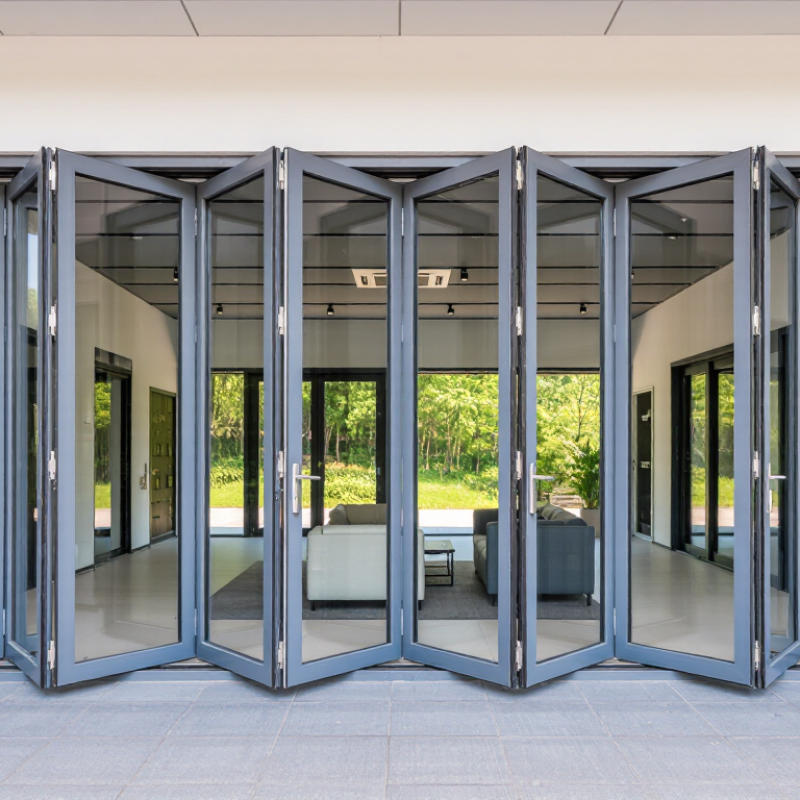
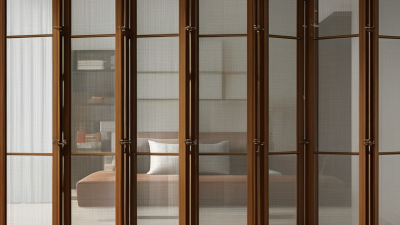
Chinese manufacturers produce several fold door types for global buyers, each suited to a different building layout. Bi-fold doors use two or more panels that fold toward one side. They work well for patios, cafés, and wide living-room openings. Multi-fold systems can cover larger spans, while accordion doors use narrow connected panels for flexible room division.
Folding-sliding doors combine folding movement with a sliding track. This design reduces the swing space needed indoors. Aluminum frames are common because they are light, rigid, and suitable for large glass panels. Thermal-break aluminum can improve insulation in colder regions. uPVC folding doors offer another option, especially for residential projects with moderate opening sizes. Glass choices may include clear, tinted, laminated, or low-emissivity panels.
Project experience shows that hardware quality matters as much as appearance. Rollers should move smoothly, and the track must match the opening weight. Buyers should request section drawings, drainage details, packing photos, and performance test records. Sample approval is useful, but it cannot reveal every installation problem. A beautiful door may still leak if the sill design is wrong. That deserves attention. Custom colors, panel widths, and opening directions are available, but unusual dimensions can increase lead times and adjustment risks. Manufacturers should confirm measurements carefully before production.
Best Fold Door Manufacturers in China for Global Buyers
Selecting a reliable fold door supplier requires more than comparing prices. In factory audits, small details often reveal production maturity. Check aluminum wall thickness, hardware grade, gasket quality, and panel alignment. Ask for batch records, inspection photos, and installation drawings. A serious manufacturer should provide test evidence for air leakage, water resistance, wind pressure, and repeated opening cycles. ISO 9001 certification can support process control, but it does not replace independent product testing. Ask who performed the tests and when.
Energy performance also deserves attention. The International Energy Agency reported that buildings used about 30% of global final energy in 2022. Poorly sealed fold doors can increase heat loss near entrances and balconies. Request U-value data, glass specifications, and clear sealing details. Do not accept “energy-saving” as a complete technical claim. The figures may change with glass type, frame size, and installation quality. That part is easy to overlook.
Tips: Request one full-size sample before bulk production. Test the rollers on your actual floor condition. Confirm spare-parts availability for at least several years. Review packaging with a drop and moisture-risk discussion. A factory may promise short lead times, yet custom colors and oversized panels can create delays. Ask for a written production schedule, milestone photos, and a defined remedy for defects. The cheapest quotation is not always the lowest landed cost.
Leading fold door manufacturers in China serve global buyers with flexible designs, practical engineering, and scalable production. Experienced factories usually offer aluminum, uPVC, or thermally broken systems for homes, hotels, offices, and retail spaces. Their technical teams can adjust panel widths, glass options, track systems, and opening directions for different projects.
Reliable manufacturers should provide clear drawings, material specifications, test reports, and production samples before mass manufacturing. Ask about air tightness, water resistance, wind-load performance, hardware durability, and surface-finish consistency. A factory with export experience should explain packaging methods, inspection stages, lead times, and replacement procedures. Factory visits or live video inspections can reveal details that brochures hide, such as workshop organization and quality-control records. No supplier is perfect. Small communication gaps can still affect measurements, colors, or delivery schedules.
Tips: Request one complete sample door before placing a large order. Compare frame thickness, corner joints, rollers, seals, and locking movement by hand. Confirm dimensions using approved drawings. Keep every change in writing. Independent pre-shipment inspection is also worthwhile, especially for first-time cooperation. Some buyers focus only on price and regret it later. A lower quotation may reflect thinner profiles, weaker hardware, or limited after-sales support. Choose a manufacturer that answers technical questions clearly and admits practical limitations.
Global buyers should evaluate Chinese folding door manufacturers through measurable quality systems, customization depth, and production discipline. The ISO Survey 2023 recorded more than 1.26 million ISO 9001 certificates worldwide, showing how widely quality management has become a baseline expectation. Yet certification alone proves little. Ask for batch inspection records, material certificates, weld photographs, and test results for air leakage, water resistance, and wind load. For exterior systems, EN 14351-1 and relevant ASTM methods provide useful reference points.
Customization should be practical, not merely visual. Experienced factories can adjust panel widths, track lengths, hinge positions, glazing types, thermal breaks, colors, and packaging for different climates. A serious quotation should show tolerances, hardware grades, replacement-part plans, and container loading diagrams. Production capability matters too. Request evidence of CNC cutting, powder-coating controls, assembly checks, and final sampling inspections. Industry research from the International Energy Agency repeatedly links better building envelopes with lower operational energy demand, so sealing details deserve close attention.
Small details matter.
A factory may promise a 30-day lead time, but capacity changes during peak seasons. This is where buyers should remain skeptical. I would compare sample performance with mass-production controls, not trust showroom polish. Independent pre-shipment inspection adds cost, but it can expose uneven gaps, scratched finishes, or poorly protected corners before delivery. Mistakes still happen. Reliable manufacturers disclose them early and document corrective action.
Choosing the Best Fold Door Manufacturers in China for Global Buyers
Reliable export service begins with clear product and shipping details. Ask for aluminum grade, panel thickness, glass specification, hardware options, and folding test results. Experienced suppliers should provide drawings, samples, carton dimensions, and realistic lead times. In practice, export prices vary with door size, finish, packaging, order volume, and destination port. Request a full quotation, not only a unit price. Confirm whether it includes tooling, inland delivery, export documents, and loading charges. A low quote may hide important costs.
Tips: Compare three written quotations. Check factory photos carefully. Request a video inspection of production and packing. Verify the business license, export experience, factory address, and previous shipment records. Ask for a sample before placing a large order. Measure its frame, seals, rollers, and surface finish. No process is perfect.
Supplier verification should continue after sampling. Review the sales contract, payment schedule, inspection point, warranty terms, and replacement procedure. A dependable manufacturer explains delays instead of avoiding them. Before shipment, use an independent inspection service to check quantity, dimensions, color consistency, glass condition, and carton labels. I have found that small details, such as corner protection and moisture-resistant wrapping, often affect arrival quality. Still, inspection cannot remove every risk. Buyers should keep written records and allow time for corrections.
| Supplier Capability Area | Common Product or Service Option | Typical Technical Data | Indicative Export Price Range | Typical MOQ | Indicative Lead Time | Buyer Verification Evidence |
|---|---|---|---|---|---|---|
| Aluminium Bi-Fold Doors | Thermally broken aluminium frame with insulated glass | Common frame depth: 70–100 mm; double-glazed units: approximately 20–28 mm; common opening height: up to about 3,000 mm, subject to hardware limits | Approximately USD 220–650 per m², EXW; glass, hardware, finish, and quantity affect the final price | Usually 10–30 m² or one small production batch | Approximately 25–45 days after drawing approval and deposit | Extrusion specifications, thermal-performance data, profile samples, and approved shop drawings |
| Aluminium Sliding-Folding Systems | Multi-panel folding-sliding door for wide residential or commercial openings | Typical panel width: 600–1,200 mm; multi-point locking is commonly available; maximum system size depends on panel weight and roller capacity | Approximately USD 260–750 per m², EXW | Usually 10–30 m² | Approximately 30–50 days | Panel-weight calculation, roller load rating, cycle-test records, and system assembly drawings |
| uPVC Folding Doors | Multi-chamber uPVC profile with steel reinforcement and insulated glass | Common profile width: 60–88 mm; double glazing is widely used; suitable for moderate-size openings when reinforcement is correctly specified | Approximately USD 150–400 per m², EXW | Usually 20–50 m² | Approximately 25–45 days | Profile chamber drawings, reinforcement thickness, welding records, and weather-seal specifications |
| Thermally Broken Systems | Energy-efficient aluminium folding door with polyamide thermal isolator | Typical thermal barrier width: about 24–34 mm; low-E insulated glass can be specified; performance depends on the complete tested assembly | Approximately USD 320–850 per m², EXW | Usually 10–30 m² | Approximately 35–55 days | U-value calculation, thermal-break material data, air/water test results, and glass configuration |
| Impact-Resistant Options | Laminated or impact-rated glass with reinforced frame and hardware | Common glazing choices include laminated safety glass; exact impact classification depends on glass build-up, interlayer, frame, and local test standard | Approximately USD 380–1,000 per m², EXW | Usually 10–30 m² | Approximately 40–60 days | Glass composition, impact-test report, frame anchoring details, and compliance documentation for the destination market |
| Custom Color and Surface Finish | Powder coating, anodizing, or wood-effect aluminium finish | Common powder-coating references include standard architectural color ranges; wood-effect and special finishes generally require extra approval and sampling | Usually adds about USD 10–45 per m² to the base door price | Often 50–100 m² for non-standard colors | Add approximately 7–15 days for special finishes | Finish sample, coating thickness record, color reference, and batch consistency procedure |
| OEM and Project Manufacturing | Made-to-order doors based on architectural schedules and shop drawings | Can include non-standard sizes, opening directions, handle positions, glazing, screens, and coordinated hardware schedules | Usually quoted per project; custom engineering may add 5–15% over a standard configuration | Typically one project lot, subject to engineering complexity | Approximately 35–70 days, including engineering and approval | Factory layout, production photos, drawing revision control, sample approval, and documented quality checkpoints |
| Export Packaging | Protective film, corner protection, foam, cartons, pallets, or export crates | Packaging should protect finished surfaces, glass edges, hardware, and frame corners during container handling | Approximately USD 15–60 per door set, depending on packaging method | Normally follows the production MOQ | Included within the production schedule | Packaging photos, loading method, pallet dimensions, gross weight, and packing list |
| Shipping and Export Documents | FOB, CIF, or other agreed international trade terms | Typical documents include commercial invoice, packing list, bill of lading, certificate of origin when required, and product compliance files | Freight is separate from product pricing and varies by destination, season, volume, and Incoterm | Based on the order quantity and shipping plan | Booking and transit time vary by destination and carrier | Draft invoice, packing list, Incoterm confirmation, HS-code review, and shipping-document sample |
| Pre-Order Supplier Verification | Factory audit, sample order, video inspection, or third-party inspection | Verification should cover legal entity, manufacturing address, production capacity, quality system, material traceability, and export history | Inspection fees commonly range from approximately USD 200–500 per visit, excluding travel or special testing | One sample order or one inspection assignment | Usually 3–10 business days for a basic inspection report | Business license, bank-account consistency, factory video call, sample inspection, and independent inspection report |
| Payment Risk Control | Milestone payment linked to drawings, production, inspection, and shipment | A common commercial structure is a deposit followed by balance payment before shipment, subject to contract terms and buyer risk policy | Payment terms are negotiated; avoid comparing price without comparing warranty, packaging, tooling, and inspection scope | Defined in the sales contract | Follows agreed production milestones | Signed contract, proforma invoice, beneficiary verification, inspection release procedure, and warranty terms |
| After-Sales Support | Installation guidance, spare hardware, replacement parts, and warranty support | Support may cover rollers, handles, locks, seals, adjustment instructions, and installation drawings | Warranty and replacement-part costs should be stated separately in the quotation | Usually no additional MOQ for warranty parts; commercial spare parts may have a minimum quantity | Replacement-part dispatch commonly takes 7–30 days, depending on availability | Written warranty, spare-parts list, installation manual, response-time commitment, and claims process |
Pricing and lead-time note: The figures shown are indicative export-market ranges for comparison only, not binding quotations. Final prices depend on door dimensions, opening configuration, glass specification, profile system, finish, hardware, packaging, order quantity, destination, and Incoterms. Buyers should verify all technical and commercial data through approved drawings, samples, written quotations, and pre-shipment inspection.