Top 10 Tips for Access Panels in Global Procurement?
In the rapidly evolving realm of global procurement, Access Panels have become a critical tool for organizations seeking to enhance their market insights. These panels offer companies a direct line to consumer opinions. According to a recent study by MMR Research Worldwide, 85% of professionals in the research sector rely on Access Panels for high-quality data collection. This highlights their importance in shaping strategic decisions.
Leveraging Access Panels allows firms to gather feedback efficiently. Organizations can tap into diverse demographics, ensuring they receive a balanced view of consumer needs. However, as using these panels becomes more popular, challenges arise. Ensuring panel quality and accuracy remains a constant concern. A report by Esomar indicates that 32% of market researchers have faced issues related to panel fatigue, impacting data reliability.
The dynamics of Access Panels create an opportunity for organizations to refine their procurement processes. Companies must reflect on their approaches, weighing the benefits against these challenges. An improved understanding of panel engagement can lead to more informed decision-making. The goal is to maximize value while remaining aware of the potential pitfalls.

Understanding Access Panels in Global Procurement
Access panels play a crucial role in global procurement strategies. They provide valuable insights, enabling companies to make data-driven decisions. According to recent studies, 70% of organizations leverage access panels for market research, emphasizing their importance in understanding consumer behavior.
When utilizing access panels, it’s essential to ensure demographic diversity. Reports indicate that diverse panels yield higher quality insights. Yet, many companies overlook this factor, leading to skewed results. This highlights the need for continuous evaluation of participant selection and engagement strategies.
Moreover, managing panel fatigue is a growing concern. Frequent surveys can lead to disengagement. Data shows that 40% of panelists express frustration with survey frequency. Companies must find a balance between gathering necessary data and maintaining panelist interest. Striking this balance is key for effective procurement processes.
Top 10 Tips for Access Panels in Global Procurement
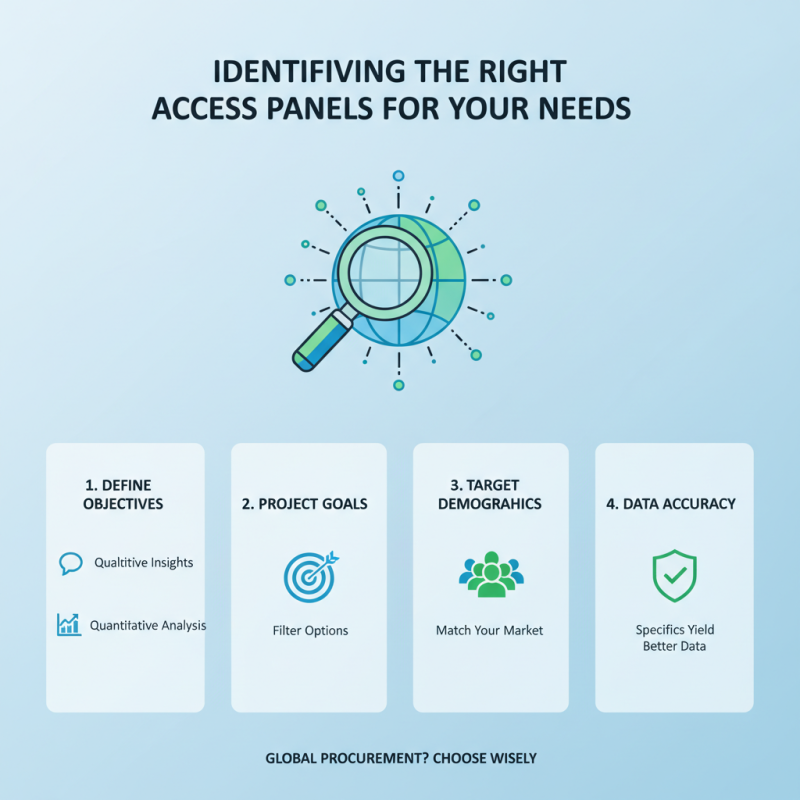
Best Practices for Engaging with Access Panels Effectively
Engaging with access panels effectively requires a blend of strategic planning and insightful execution. According to a recent report by the Market Research Association, companies utilizing access panels experienced a 25% boost in research efficiency. Selecting the right panel is crucial. Aim for diverse demographics to ensure comprehensive insights, as a study from Statista reveals that 70% of consumers prefer personalized feedback mechanisms.
Communication is another key element. Establishing clear and concise messaging encourages participation. Surveys indicate that 54% of panel members drop out due to unclear instructions. Utilize engaging formats, such as interactive surveys, which can increase completion rates by up to 40%.
Moreover, monitoring engagement is essential. Regularly evaluate the performance of panels to understand participation trends. This helps identify potential drop-off points. In a study published by the International Journal of Market Research, companies that adjusted their approaches based on participant feedback saw a retention rate increase of 30%. Continuous improvement strengthens relationships and enhances the overall quality of gathered data.
Top 10 Tips for Access Panels in Global Procurement
| Tip Number |
Best Practice |
Description |
| 1 |
Define Objectives |
Clearly outline the goals you aim to achieve with your access panels. |
| 2 |
Select the Right Audience |
Ensure you cater to the specific demographics relevant to your research. |
| 3 |
Engage Regularly |
Keep participants engaged through regular communication and updates. |
| 4 |
Incentivize Participation |
Offer rewards to encourage participants to share their insights. |
| 5 |
Utilize Technology |
Leverage digital tools to streamline engagement and data collection. |
| 6 |
Conduct Training |
Provide training sessions to familiarize panel members with the process. |
| 7 |
Foster Community |
Create a sense of community among panelists to build loyalty. |
| 8 |
Ensure Data Privacy |
Prioritize the confidentiality and security of participant data. |
| 9 |
Analyze Feedback |
Regularly evaluate feedback for continuous improvement of the panel. |
| 10 |
Report Findings |
Share outcomes with participants to emphasize their contribution. |
Measuring Success: KPIs for Access Panel Participation
In the realm of global procurement, access panel effectiveness hinges on well-defined Key Performance Indicators (KPIs). A study by ESOMAR reveals that 76% of firms recognize the need for accurate measurement. KPIs streamline participation assessment, facilitating targeted strategies. Metrics should include response rates, engagement levels, and quality of insights.
Examining response rates is crucial. An optimal rate typically hovers around 15-20%. If a panel consistently underperforms, it's worth exploring underlying causes. Engagement metrics, like the frequency of participation, reflect panelists' interest and commitment. High engagement can indicate that your panel provides value. Additionally, feedback on the relevance of the surveys is essential for ensuring continuous improvement.
Quality of insights often varies. It’s not just about quantity, but the depth of responses matters. According to research by the Insights Association, a mere 30% of data gathered is actionable. Validating the insights obtained from your panels can highlight areas for refinement. This cycle of measuring success through KPIs must encourage constant action and recalibration to enhance overall procurement strategies.
Addressing Challenges in Access Panel Management
In global procurement, managing access panels presents unique challenges. One major issue is
maintaining panel diversity. A homogeneous panel can lead to biased results.
It's crucial to regularly refresh panel membership. Invite new participants to gain varied perspectives.
This ensures insights reflect a broader spectrum of views.
Another challenge lies in participant engagement. High drop-out rates can undermine research quality.
To address this, consider incorporating incentives. Small rewards can significantly boost participation.
However, transparency about panel goals is also vital. Clearly communicate why their input matters. This builds trust
and fosters a sense of community among panelists.
Data security is a concern as well. Maintaining confidentiality while collecting feedback is essential.
Regularly review security protocols. Assess whether your measures align with data protection standards.
Be prepared for unexpected breaches. Flexibility in your approach can minimize risks.
Balancing these challenges requires constant reflection and adaptation. Each attempt to improve
is a step toward better access panel management.