What is an Indoor Folding Door and How Does it Work?
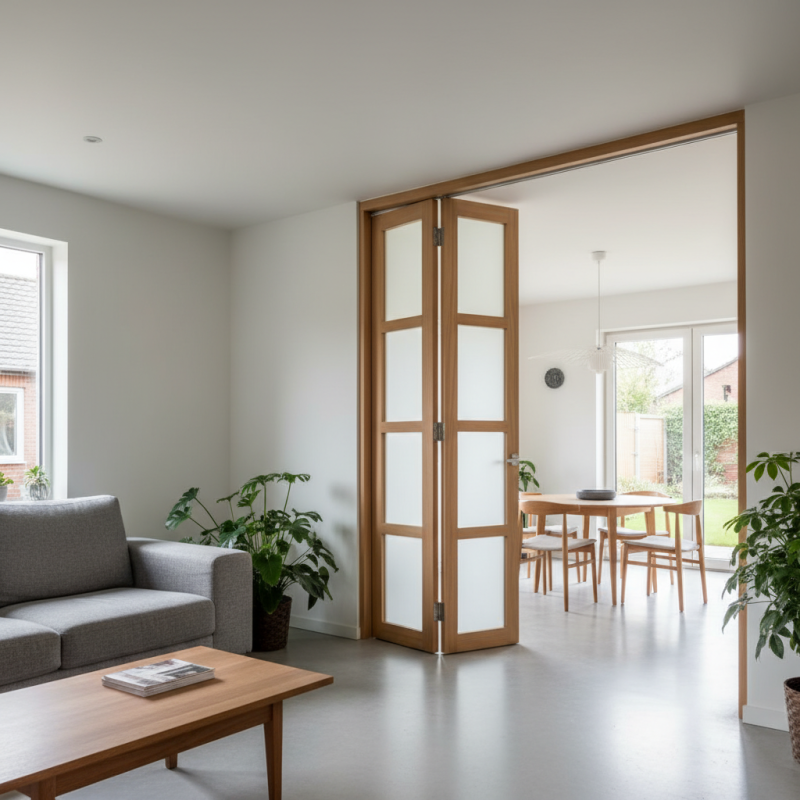
Indoor Folding Doors are versatile and functional solutions for modern spaces. These doors are designed to maximize space while offering stylish options for interiors. When closed, they create a defined area, and when opened, they provide a seamless flow between rooms.
The mechanics behind an Indoor Folding Door are quite simple yet effective. These doors consist of multiple panels joined by hinges, allowing them to fold in on themselves. They can easily slide to one side, providing flexibility in room layouts. This adaptability makes them suitable for various settings, from homes to offices.
However, the choice may not be straightforward. The installation process can challenge those unfamiliar with home improvement. Selecting the right material and design requires careful thought. Indoor Folding Doors should complement existing decor. Improper choices can lead to aesthetic mismatches or function issues. It’s important to reflect on your needs before making a decision on this unique door type.
Definition and Overview of Indoor Folding Doors
Indoor folding doors are gaining popularity in modern homes. These versatile doors offer a unique solution for space management. They work by folding back in sections, allowing for flexible use of interior spaces. This design is particularly beneficial in smaller homes where maximizing space is crucial.
According to a report from the Freedonia Group, the demand for folding doors in the U.S. is expected to grow by over 2% annually. Homeowners appreciate the combination of functionality and aesthetics these doors provide. They often use them to separate rooms or create open floor plans. The ability to transition from a closed to an open space enhances the usability of living areas.
However, not all installations go as planned. Improper measurements can lead to doors that do not fit properly. This issue can create gaps that compromise energy efficiency. Additionally, while the initial cost may seem reasonable, long-term maintenance can be overlooked. Homeowners should weigh the pros and cons before investing in these stylish yet complex systems.
Types of Indoor Folding Doors: Materials and Designs
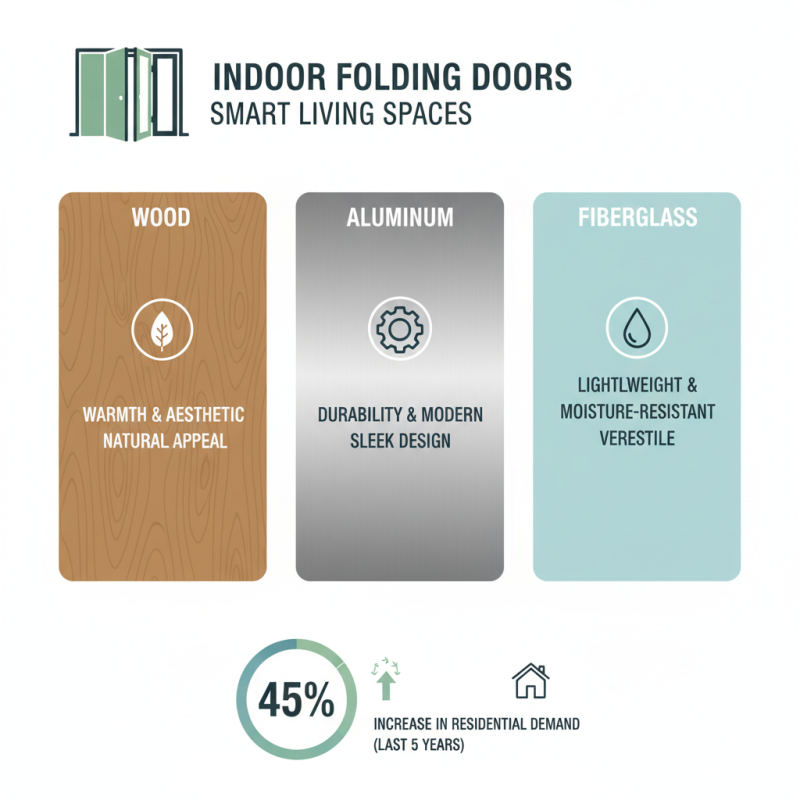
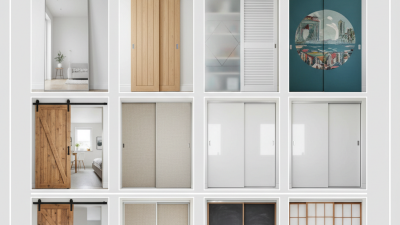
Indoor folding doors have gained popularity due to their versatility and space-saving qualities. They come in various materials, including wood, aluminum, and fiberglass. Wood offers warmth and aesthetic appeal, while aluminum provides durability and a modern look. Fiberglass, on the other hand, is lightweight and resistant to moisture. According to a report by the National Association of Home Builders, the demand for folding doors has increased by 45% in residential applications over the past five years.
Designs of indoor folding doors also vary widely. Some feature traditional panel styles, while others boast contemporary designs with sleek lines. Customization options are abundant, allowing homeowners to choose finishes and hardware that match their interiors. A 2022 industry survey indicated that 72% of homeowners are interested in unique designs that reflect personal style. However, the installation process can be challenging. Proper alignment is critical to ensure smooth operation. Misalignment can lead to functional problems and frustration.
The choice of materials and designs significantly influences cost and performance. Higher-end materials may come at a premium but can offer better insulation and longevity. Still, budget-friendly options exist, often resulting in compromises in durability or aesthetic appeal. It’s important to weigh these factors carefully before making a decision.
How Indoor Folding Doors Function: Mechanisms and Installation
Indoor folding doors offer a unique way to maximize space while enhancing aesthetics. They are designed to fold to the side, creating a flexible opening. This is ideal for small or multi-functional rooms. The mechanism typically involves a series of hinges, allowing the panels to slide and fold. This design creates an open feel, especially when entertaining guests.
Installation is crucial for optimal function. Begin by measuring the opening accurately. A level surface is necessary for proper alignment. The track system is installed first, ensuring it can support the door's weight. At times, adjusting the system might be required for a smooth glide. This step can be overlooked, leading to frustration later.
Some users may find the folding mechanism challenging at first. It may require a bit of practice to operate smoothly. Poor installation could lead to misalignment or difficulty in usage. Reflecting on one’s abilities and seeking help can lead to better results. Each step in the process should be approached with care. This can help in achieving the perfect function of indoor folding doors.
What is an Indoor Folding Door and How Does it Work?
| Feature |
Description |
Mechanism |
Installation |
| Material |
Commonly constructed from wood, glass, or composite materials. |
Operates on a folding mechanism that allows panels to stack against one another. |
Requires a header track for smooth operation; installation typically involves mounting hinges and tracks. |
| Space Saving |
Ideal for small rooms where traditional doors would take up too much space. |
Folds along a track to minimize the amount of space needed to open. |
Installation can often be a DIY project or may require professional help for complex setups. |
| Customization |
Available in various sizes, colors, and finishes to suit individual needs. |
Custom mechanisms can be designed to fit specific aesthetic requirements. |
Requires precise measurements during installation to ensure a perfect fit. |
| Versatility |
Can be used as room dividers, in closets, or to open up spaces. |
Flexible configurations to meet various functional needs. |
Installation often includes the option for hardware that complements the surrounding decor. |
Advantages of Using Indoor Folding Doors in Residential Spaces
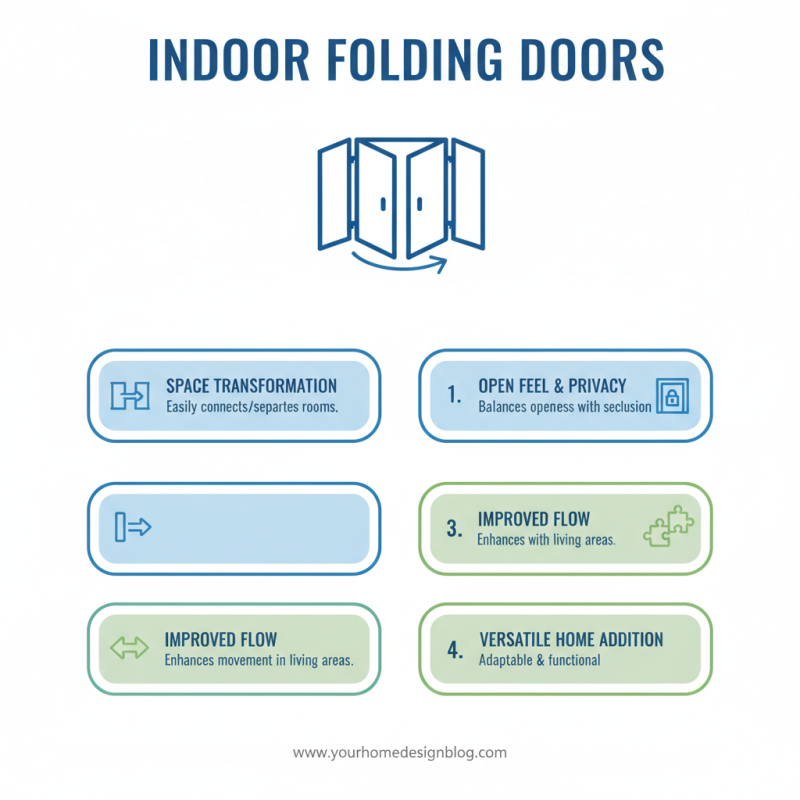
Indoor folding doors are a versatile addition to any home. They can transform spaces with ease, bridging the gap between rooms. These doors are perfect for creating an open feel while still providing privacy when needed. The functionality of folding doors allows for better flow in your living space.
One significant advantage of indoor folding doors is their space-saving ability. When open, they take up minimal room and let in more natural light. It makes even smaller areas feel larger. You can use them in various locations, like dining rooms or office spaces. This flexibility means you can change layouts without heavy renovations.
Tips: Consider the design that complements your decor. Choose colors and materials that fit well. Additionally, maintain your folding doors regularly for smooth operation. Dust can accumulate in the hinges, causing them to stick. Make sure to check for any wear and tear, addressing issues promptly to prolong their life.
Industry Statistics on Popularity and Utilization of Folding Doors
Indoor folding doors are increasingly popular for various applications. According to recent industry reports, the market for folding doors is projected to grow at a rate of 6.5% annually. This growth reflects a shift in consumer preferences toward multifunctional spaces.
Many homeowners opt for folding doors to enhance space efficiency. A survey revealed that 72% of users appreciate how these doors create versatile layouts. They allow seamless transitions between rooms. In open floor plans, folding doors can help delineate spaces without permanent barriers. However, some installations may require careful planning. Misalignment can lead to operational issues.
The rise in multifamily housing has also sparked interest in indoor folding doors. Approximately 58% of developers now consider them essential for maximizing apartment layouts. These doors can also improve natural light flow. Yet, the initial installation costs can be a barrier for some projects. Overall, this trend indicates a demand for innovative and flexible living solutions.